ReacDEFI's Liquidation Protection Is Live on Ethereum and Base

Liquidation feels like a shock to many users. Positions weaken gradually: health factor drops, buffers thin, and prices move against you. Then one transaction closes everything. Soft liquidation addresses that gap. Instead of enforcing at a single threshold, it responds to early warning signals and adjusts while the position can still recover.
With ReacDEFI now live on Ethereum and Base Mainnets, that protection is no longer theoretical. Reactive Network's DApp brings automated, rule-based liquidation protection to two of DeFi's most active chains.
How Soft Liquidation Works
ReacDEFI's Liquidation Protection is configured directly in the interface. Each element defines how and when your position is protected.
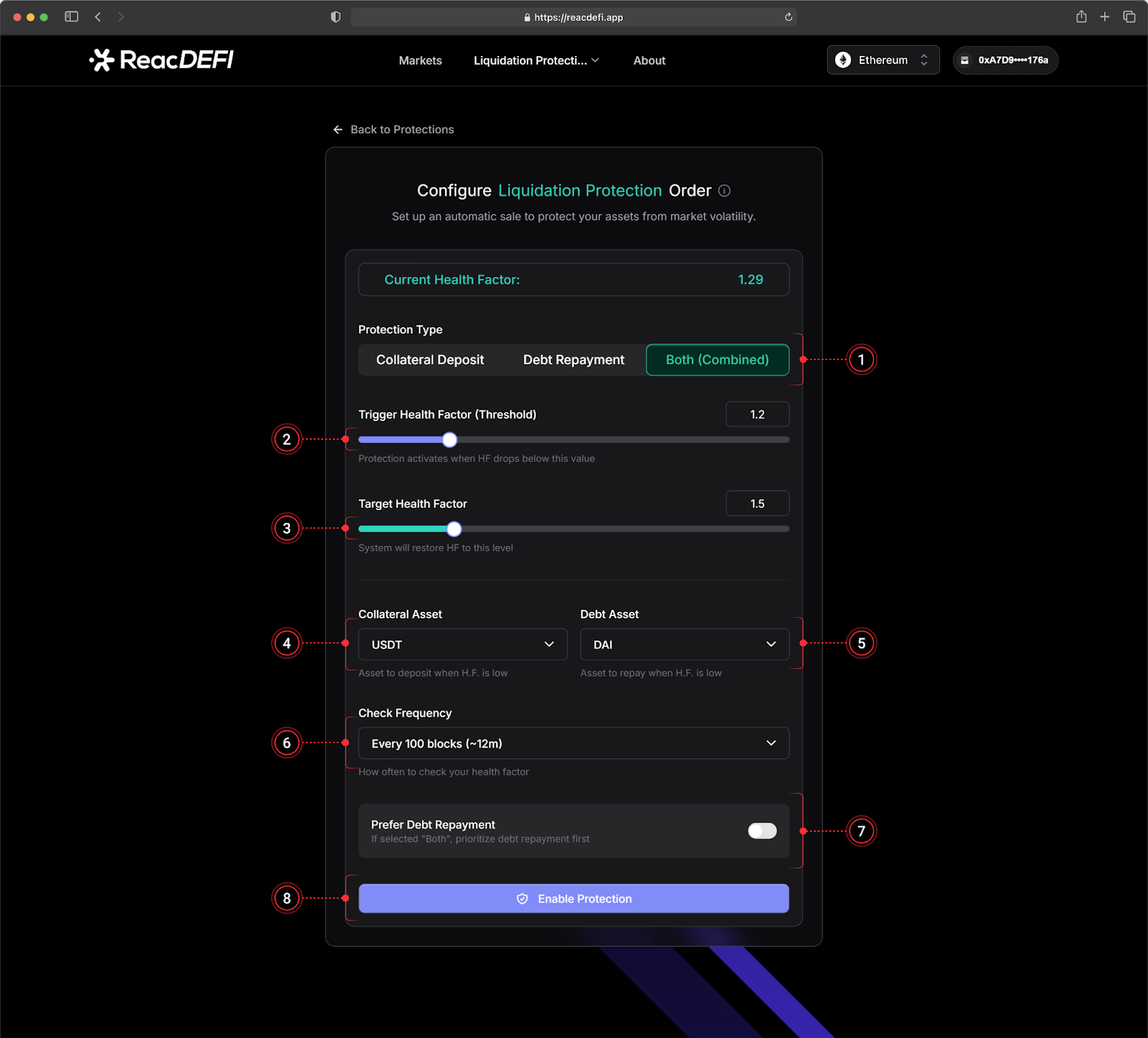
1. Protection Type You choose how the system should intervene: add more collateral when Health Factor drops (Collateral Deposit), repay part of the borrowed asset (Debt Repayment), or use both methods (Combined).
2. Trigger Health Factor This is the activation threshold. If your current Health Factor is 1.29 and you set the trigger at 1.2, nothing happens while HF stays above 1.2. The moment it drops below, protection activates automatically while the position is still solvent.
3. Target Health Factor This defines how far recovery goes. If the target is 1.5, ReacDEFI adjusts your position until HF reaches 1.5, then stops. It doesn't close the position. It restores a buffer and exits.
4. If you selected Collateral Deposit (or Combined), this is the asset that will be added to your position when protection activates. You decide in advance where additional collateral comes from.
5. If you selected Debt Repayment (or Combined), this is the asset that will be repaid when HF drops below your trigger. Again, the method is predefined. Nothing is improvised during market stress.
6. Check Frequency This controls how often the system checks your Health Factor: every block, every 10 blocks, every 100 blocks. every 1000 blocks, and every 10,000 blocks. More frequent checks mean faster reaction. Less frequent checks reduce activity.
7. Prefer Debt Repayment (Optional) In Combined Mode, this toggle lets you prioritize debt repayment before adding collateral, giving you control over which side of the position adjusts first.
8. Enable Protection Once everything is configured, you activate protection. From that point forward, ReacDEFI monitors your position automatically and executes according to the parameters you defined.
Recovery Options
ReacDEFI gives three protection modes:
- Collateral Deposit: adds more collateral when the Trigger Health Factor is breached, increasing your buffer without reducing debt.
- Debt Repayment: repays part of the borrowed asset, reducing leverage directly by lowering outstanding debt.
- Combined Mode: uses both methods, with optional priority for debt repayment.
Each mode changes what fields you configure and how the system restores your position.
When you select Collateral Deposit, the system protects your position by adding more collateral once the Trigger Health Factor is breached.
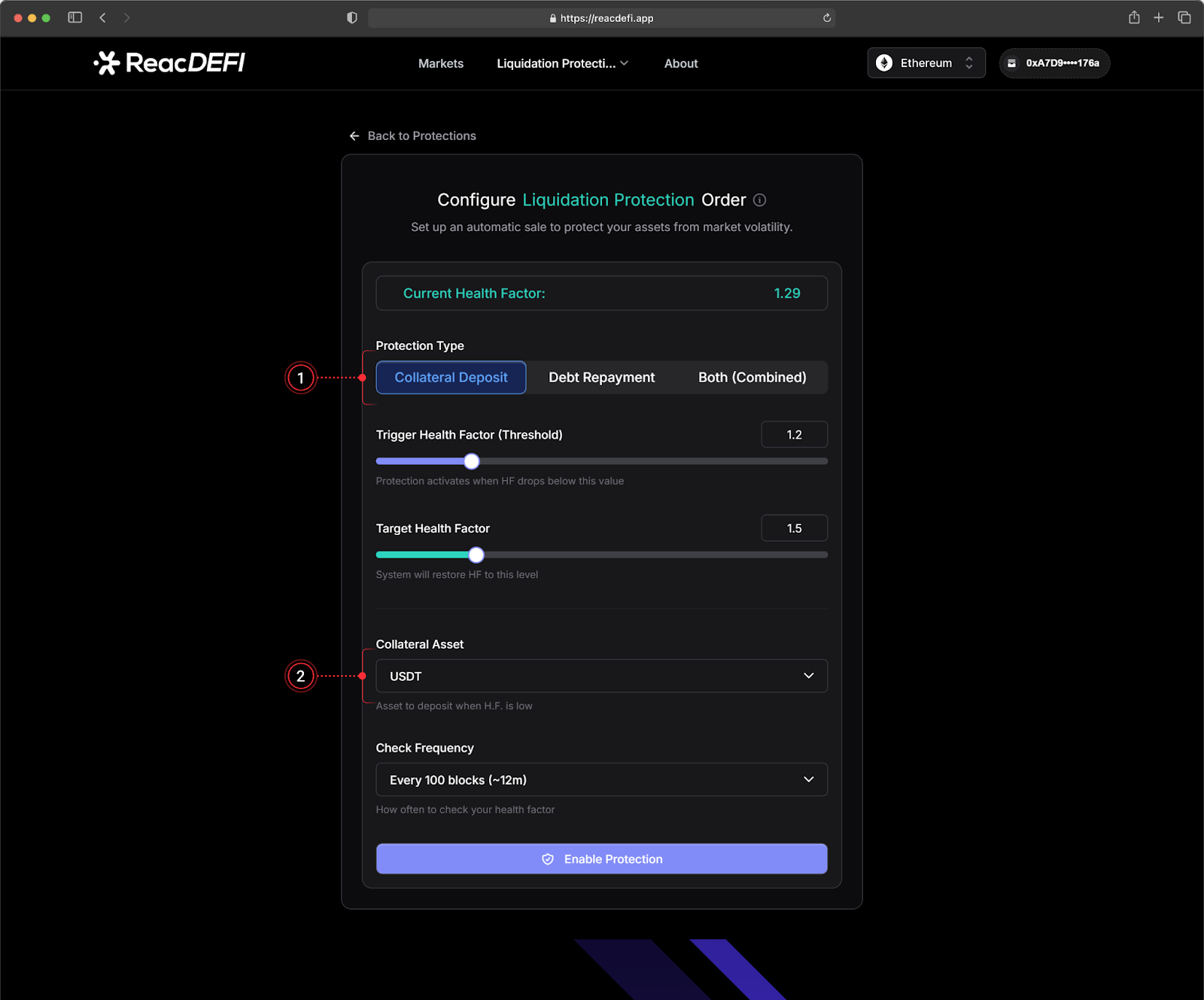
When HF drops below your trigger, ReacDEFI automatically deposits the selected collateral asset until the position reaches your target HF. This increases your buffer without reducing your debt.
Alternatively, when you select Debt Repayment, protection works by repaying part of your borrowed asset.
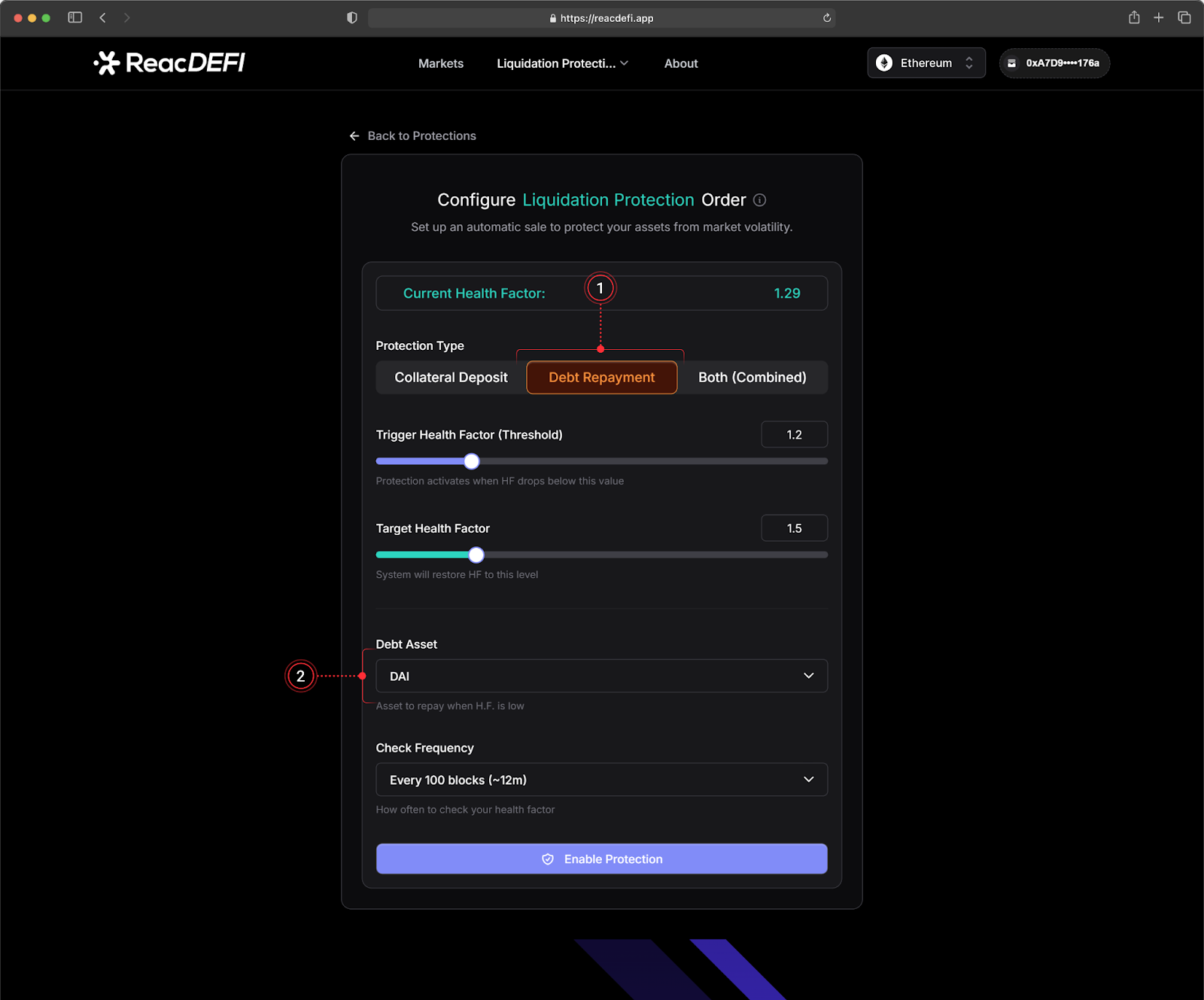
Once HF falls below your trigger, ReacDEFI repays part of the selected debt asset until HF reaches your target. This reduces leverage directly by lowering outstanding debt.
Live on Ethereum and Base
ReacDEFI doesn't remove hard liquidation from the lending protocol underneath. If risk continues to rise and buffers are exhausted, liquidation can still happen.
What changes is the path leading there. Instead of waiting for a single irreversible moment, the system detects stress early, intervenes automatically, restores a defined buffer, and continues monitoring. Liquidation becomes less likely to feel sudden.
With the launch on Ethereum and Base Mainnets, ReacDEFI's soft liquidation is available where it matters most: on chains with deep liquidity and active lending markets. Users on both networks can now configure automated protection for their positions without relying on manual monitoring or third-party keepers racing for the same opportunity.
About Reactive Network
Reactive Network is an EVM automation layer built around Reactive Contracts — event-driven smart contracts for cross-chain, on-chain automation.
Reactive Contracts monitor event logs across EVM chains and execute Solidity logic when subscribed events occur, autonomously deciding when to send cross-chain callback transactions. This model supports conditional cross-chain state changes and continuous cross-chain workflows.
Website | Blog | X | Telegram | Discord | Docs
Build once — react everywhere!